|
|

|
timeline
|
|
2014 | |
25 November: The Ashden Directory and Ashdenizen remain online, but the pages will no longer be updated.
20 November: Thirty countries meeting in Berlin pledged $9.3bn for a green climate fund to help developing countries cut emissions and prepare for global warming.
20 November: Chemicals giant Ineos announces investments up to 640 million pounds in shale gas exploration in the UK.
19 November: The US Senate does not pass the Keystone XL Pipeline Bill, which would have approved a pipeline carrying tar sands oil from Alberta, Canada to the US mid-western state of Nebraska. photo left
18 November: The US and China announce a secretly negotiated agreement to reduce greenhouse gas emissions.
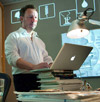
5 November: 2071 opens at the Royal Court Theatre, London, a staged lecture by Chris Rapley, CBE, Professor of Climate Science at University College London, the only West End production on climate change in the year. photo left
November: ARTCOP21 announced: a cultural festival and symposium for the 21st United Nations Conference on climate change to be held in Paris from 30 November - 10 December 2015, partnered by COAL and Cape Farewell.
November: The United Nations International Panel on Climate Change (IPCC) publishes its Synthesis Report, drawing together its last three reports on the physical science of climate change; its impacts on ecosystems, our food supply and how we adapt; and on solutions.
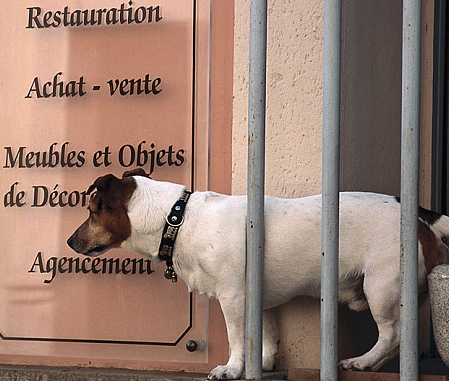
31 October: The French Parliament votes in favour of changes to the Napoleonic civil code to view animals as 'living beings capable of sensitivity', and not as 'furniture'. photo left
October: Occupy protesters are arrested in Parliament Square. Occupy protests have continued throughout the year, in Hong Kong, the US, Canada and the UK.
October: Naomi Klein publishes This Changes Everything: Capitalism vs. the Climate.
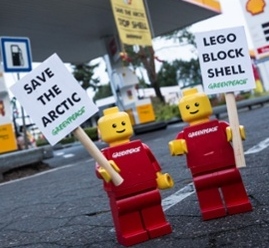
9 October: The toy manufacturer Lego ends it association with Shell after a campaign by Greenpeace. photo left
8 October: The University of Glasgow becomes the first UK university to divest from the fossil fuels industry.
21-22 September: TippingPoint holds an event in Oxford, in association with the AHRC-funded Stories of Change project.
18 September: The 'No' side in the Scottish Independence Referendum win with 55.3% of the vote, the 'Yes' side receiving 44.7%.
September: An estimated 35,000 Pacific walrus come onshore in northwest Alaska when they cannot find sea ice for resting.
September: The heirs to the Rockefeller oil fortune announce they will sever their investment links with the fossil fuel industries that drill wells and build pipelines.
23 September: The United Nations convenes Climate Summit 2014.
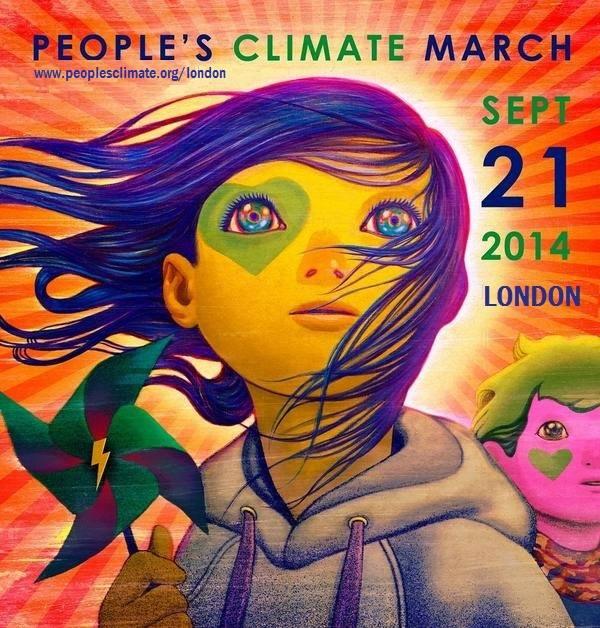
21 September: People's Climate Marches are held across the world in advance of the UN Climate Summit. photo left
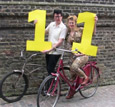
August: The HandleBards win the 2014 Sustainable Practice Award at the Edinburgh Festival Fringe for their bicycle-powered production of Shakespeare's A Comedy of Errors.
August: Over 45 productions at the Edinburgh Festival Fringe have ecological themes.
27 July: The Department for Energy and Climate Change launches the so-called '14th onshore licensing round', inviting companies to bid for the rights to explore in as-yet untouched parts of the country. It could potentially result in fracking taking place across more than half of Britain.
17 April: Green Party MP Caroline Lucas and four co-defendants found not guilty of obstructing public highway and public order offences during protests at Cuadrilla's exploratory oil drilling site in Balcombe, West Sussex, in August 2013.
13 April: The third working group of the IPCC publishes its report on the options for mitigating climate change and the underlying technological, economic and institutional requirements. Clean sources of energy will have to dominate world energy supplies by 2050 in order to avoid catastrophic climate change.
31 March: The IPCC releases its Fifth Assessment Report on impacts, adaptation and vulnerability, concluding that climate change is having impacts in real time: melting sea ice, thawing permafrost in the Arctic, killing coral reefs and leading to heat waves, heavy rains and mega-disasters. Further, the impacts pose a threat to global food stocks and human security, and that no one will be unaffected.
January - December 2014: Berlin's Haus der Kulturen der Welt runs the Anthropocene Project, as part of a two-year programme of events looking at the arts, culture and sciences relating to the concept of the Anthropocene. photo left
|
2013 | |
8 October: Arts Admin and TippingPoint host the first Whitechapel Green Drinks, an informal networking event open to people working in the environmental and arts fields.
3 October: The International Programme on the State of the Ocean (IPSO) finds that ocean acidification is at the highest level for 300 million years due to carbon emissions.
27 September: The Fifth Assessment Report of the Intergovernmental Panel on Climate Change (IPCC) publishes the Working Group report on the Physical Science Basis, finding it 'unequivocal' that even if the world begins to moderate greenhouse gas emissions, warming is likely to cross the critical threshold of 2 degrees Celsius by the end of this century. 23 September: A Declaration on Climate Justice is issued by the Mary Robinson Foundation - Climate Justice, preparing for an international climate agreement in 2015.
5 - 14 September: The World Stage Design event in Cardiff embeds 'People, Profit, Planet', a strand of performances and talks on sustainable design organised by the Center for Sustainable Practice in the Arts.
23 August: Daniel Bye's How to Occupy an Oil Rig receives the 2013 Award for Sustainable Production at the Edinburgh Festival Fringe. 16 - 21 August: In Balcombe, West Sussex, the local protest against Cuadrilla's exploratory drilling in advance of fracking is joined by No Dash for Gas: Reclaim the Power.
17 - 22 June: Artsadmin's Two Degrees Festival investigates climate, consumerism, community.
10 May: Reports show that the carbon dioxide levels have passed 400 parts per million, considered to be an indicator that the amount of the gas in the air is higher than it has been for at least three million years.
January: The Year of Natural Scotland sponsors 14 arts projects across every region of the country.
January: A new generation of road protesters dig in across southern England.
|
2012 | |
December: Draft of IPCC's fifth assessment, due to be published in September 2013, leaked online by climate sceptic.
December: London Mayor Boris Johnson comes out in favour of fracking.
December: Guardian theatre critics Michael Billington and Kate Abbott name Ten Billion as the best theatre production of 2012. Ashdenizen takes another view. photo left
22 - 31 October: Hurricane Sandy travels across the Caribbean and eastern coast of the United States, hitting landfall in New York on 29 October.
October: Kieran Lynn receives the Nick Darke Award for environmental playwriting, and The Man Who Planted Trees receives the Center for Sustainable Practice in the Arts award for sustainable production at the Edinburgh Fringe.
1 - 9 September: Volcano Theatre and the Centre for Alternative Technology, Wales present the Emergence Summit, on arts and sustainability.
11 September: The Whanganui River in Aotearoa / New Zealand is the first river to be recognised as an entity in law.
27 August: Record broken for lowest extent of Arctic sea ice.
3 - 27 August: Edinburgh Festival Fringe hosts over 100 theatre, dance, physical theatre, spoken word, comedy and children's shows with ecological themes. image left
August: Performance Research publishes edition 'On Ecology', edited by Stephen Bottoms, Aaron Franks and Paula Kramer.
12 July: London International Festival of Theatre (LIFT) hosts the panel discussion 'Not Waving But Drowning. Has theatre risen to the challenge of climate change?'
12 July: Ten Billion by Stephen Emmott and Katie Mitchell opens at the Jerwood Theatre Upstairs, Royal Court Theatre.
May: Readings in Performance and Ecology published, edited by Theresa J. May and Wendy Arons.
May: The Brighton Festival awarded its New Writing South Best New Play award
to both Feral Theatre for Triptych, photo left, and Jonathan Brown for The Last Lunch. The award is for new writing on any theme.
May: Creu Cymru, Julie's Bicycle, Cynnal Cymru and others join to green 42 Welsh theatres and institutes.
May: Research in Drama Education publishes a themed issue on 'Environmentalism', edited by Deirdre Heddon and Sally Mackay.
24 February: Arts Council England Chief Executive Alan Davey announces that ACE is the first arts funding body worldwide to embed environmental sustainability into its funding agreements for National Portfolio Organisations and Major Partner Museums. Julie's Bicycle will provide the expertise. Davey's announcement is made at the TippingPoint event in Newcastle.
24 February: The Great Immensity, a play about climate change by the American theatre company The Citizens, and financed with a $750,000 (£470,000) grant by the US National Science Foundation, opens in Kansas City. Reviewers find it informative but lacking dramatic structure. photo left
14 February: The State of the Arts conference includes, for the first time, two sessions on 'Artists and Our Future Environment'.
|
2011 | |
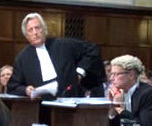
30 September: A mock Ecocide Trial in the UK Supreme Court finds fictional corporate CEO defendants guilty of two counts of Ecocide crimes relating to the Canadian Tar Sands, and not guilty on one count relating to the Deepwater Horizon disaster. photo left
1 September: Allotment by Nutshell Theatre receives the Center for Sustainable Practice in the Arts Award for Sustainable Production at the Edinburgh Festival Fringe.
15 July - 12 August: Cape Farewell's 2011 Expedition travels the Scottish Islands.
13 July: Green Alliance hosts a debate on 'What Have the Arts Ever Done for the Environment' at the Royal Opera House, London. Kellie Payne blogs it on Ashdenizen.
27 June: Björk premieres Biophilia at the Manchester International Festival.
22 June: Greening Design forum hosted by the Society for British Theatre Designers and Rose Bruford College.
12 - 18 June: Artsadmin hosts their Two Degrees 2011 Festival: Art & Activism, Climate and Cuts. photo left
11 May: The Ashden Directory and Ashdenizen launch their project to find new metaphors for sustainability with an online DVD.
15 February: Seven TippingPoint commissions announced: As the World Tipped, My Last Car, In the Beginning was the End, A Beautiful Thing, Found Voices, Unplugged, The Funeral for Lost Species.
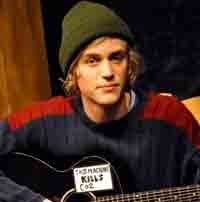
4 February: The Heretic opens at the Royal Court Theatre, a play by Richard Bean about a climate scientist. photo left: Johnny Flynn (Ben Shotter)
1 February: Water, a play about climate change by Filter Theatre Company, opens a London run at the Tricycle Theatre.
1 February: Greenland opens in the Lyttleton Theatre, at the National Theatre, written by Moira Buffini, Matt Charman, Penelope Skinner and Jack Thorne.
20 January - 26 February: Ashdenizen blogs on the three concurrent climate change theatre productions in London.
20 January: 10 Climate Stories exhibition opens at the Science Museum, London. Benjamin Morris blogs it on Ashdenizen.
|
|
2010 | |
30 November: Mediating Change, the series of four panel discussions on culture and climate change, is available as online podcasts.
29 November - 10 December: COP16, the UN Climate Change Conference takes place in Cancún, Mexico. The agreement reached, considered a fragile lifeline, acknowledges the need to keep temperature rises to 2° C, sets up a green climate fund to help poorer countries adapt and gives financial support for the preservation of forests. photo: Greenpeace activists on Cancún beach / Reuters
18 November: The National Theatre announces GREENLAND, its new documentary theatre piece about 'our changing relation with the planet, written by Moira Buffini, Matt Charman, Penelope Skinner and Jack Thorne, opening 1 February 2011.
18 November: The fourth Mediating Change panel, 'Futures: How cultural responses to climate change have altered our experience of time and place', takes place with Roger Harrabin, Professor Mike Hulme, Ruth Little, Oliver Morton and Carolyn Steele at the National Theatre Studio, London.
16 November: The Royal Court Theatre announces The Heretic, a new play by Richard Bean about a climate scientist, opening on 4 February 2011. image on left
16 November: The third Mediating Change panel, 'Anatomy: An anatomy of cultural responses to climate change', takes place with
Bergit Arends, Robert Butler, Beth Derbyshire and Charlie Kronick at the National Theatre Studio, London.
2 November: In the US mid-term elections, Republicans gain control of the House of Representatives and key committees on environment and energy. Climate sceptics among them vow to continue investigating the University of East Anglia climate scientists and to harrass the US Environmental Protection Agency.
29 October - 13 November: First TippingPoint events in Australia, in Melbourne, Sydney and Brisbane.
22 October: British Museum Director Neil MacGregor concludes 'A History of the World in 100 Objects' with the solar-powered lamp and charger as the 100th object.
14 October: Richard Mabey publishes Weeds: How vagabond plants gatecrashed civilisation and changed the way we think about nature.
11 October: The second Mediating Change panel, Publics: Culture, Democracy and Climate Change, takes place with Marcus Brigstocke, Vicky Long, Tim Smit and Joe Smith at the Eden Project, Cornwall.
10:10:10: A day of global positive actions on climate change organised by 10:10.
3 October: The US National Science Foundation awards a $700,000 grant to The Civilians, a New York theater company, to finance a production about climate change, 'The Great Immensity'.
23 September: Jonathan Franzen publishes Freedom, a 'green American novel'.
19 September: 153 days after the explosion, the Deepwater Horizon oil well is sealed in the Gulf of Mexico. Timeline and history.
15 September: WWF publishes Common Cause: The Case for Working with our Cultural Values , showing the importance of the values people hold and the goals people pursue in motivating change.
12 September: 'History', the first of four Mediating Change panel discussions on cultural responses to climate change, takes place at the TippingPoint event in Oxford, with Professor Diana Liverman, Dr. Wallace Heim, Siobhan Davies, CBE, and Dr. Nigel Clark, chaired by Quentin Cooper. The series is sponsored by the
Open University and the Ashden Trust. Ashdenizen blogs here.
9 September - 1 October: The Cape Farewell Expedition to the Arctic includes the playwright Nick Drake, the playwright Mikhail Dunenkov, the theatre artist Cynthia Hopkins, the dramaturg Ruth Little and the theatre director Deborah Warner.
26 August - Jellyfish Theatre, a temporary structure built of reclaimed materials, opens in London and commissions two ecological plays, OIKOS and PROTOZOA. Ashdenizen blogs it here and here.
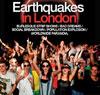
4 August - Earthquakes in London opens, the first play by the National Theatre about climate change. Ashdenizen blogs it here.
August: The Center for Sustainable Practice in the Arts (CSPA) awards the first CSPA Fringe Award for Sustainable Production at the Edinburgh Fringe to The Pantry Shelf, a comedy produced by Team M & M.
August: Edinburgh Festival Fringe has fewer plays with environmental themes than in the previous three years. There were two productions in the Edinburgh International Festival that did: Birds with Skymirrors and The Man Who Fed Butterflies.
8 July - London International Festival of Theatre and the ICA present a panel discussion The Climate for Theatre.
July and continuing: Floods in the Indus river basin of Pakistan cover one-fifth of the country's total land area and affect 20 million people. See the Ashdenizen blog on a four degree world.
4 July: Trashcatchers' Carnival, a TippingPoint commission, parades through Tooting in London.
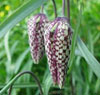
29 June - 26 July: Ashdenizen publishes guest blogs Flowers on Stage: the poppy, the daffodil, the lotus, the lungwort, the 'breath of life', the snake's head fritillary and kudzu.
28 - 30 May: Uncivilisation, the Dark Mountain Festival, takes place. Ashdenizen blogs it here and here.
13 May: 3rd Ring Out: Rehearsing the Future, a play by Metis Arts, commissioned by TippingPoint, starts its UK tour in Norwich.
11 May: UK Coalition government formed between Conservatives and Liberal Democrats promising to be the 'greenest' government ever. An update on that pledge is here.
6 May: UK General Election results in a hung Parliament.
6 May: Helen Simpson publishes In-Flight Entertainment, a collection of climate change short stories.
April - May: After five years, the Royal Society of Arts' Arts & Ecology centre closes.
20 April: Explosion on the Deepwater Horizon oil well in the Gulf of Mexico kills 11 people and starts an oil spill spreading across the region.
14 - 20 April: Ash plumes from eruptions of the Eyjafjöll volcano in Iceland force the closure of European air space.
20 March: The Royal Society and Tate Modern host Rising to the Climate Challenge. Artists and Scientists Imagine Tomorrow's World symposium.
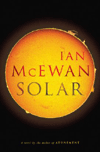
18 March: Ian McEwan publishes Solar, a satirical novel focusing on climate change.
5 - 14 March: The AV Festival 10 theme is Energy.
25 February: The National Theatre and Arts Council England host A Low Carbon Future for the Arts? conference.
15 February: The British Council and Julie's Bicycle publish the collection of essays Long Horizons. An Exploration of Art and Climate Change, available online.
30 January: A workshop at Tate Modern, 'Disobedience Makes History', led by the Laboratory of Insurrectionary Imagination, ends with participants posting a banner stating 'ART NOT OIL' from the gallery windows. Actions and interventions by several groups opposed to the sponsorship by BP of the Tate and other major art institutions continues throughout the year.
25 January: Richard North posts allegations on his blog that the International Panel on Climate Change made false predictions regarding the effects of global warming on the Amazon. The 'Amazongate' accusations were taken up by other climate sceptic journalists before being discredited.
14 January: Royal Society of Arts (RSA) and Arts Council England host State of the Arts conference.
|
|
2009 | |
7 - 18 December: The United Nations Climate Change Conference, COP15, is held in Copenhagen, with no binding agreement reached. An official cultural programme is scheduled.
May - December: In the months running up to COP15, there were major exhibitions on climate change and the arts: C Words, PLATFORM, at the Arnolfini, Bristol; RETHINK in galleries across Copenhagen; Earth Art of a Changing World at the Royal Academy of Art, London; Radical Nature at the Barbican, London; FutureSonic, Manchester; Climate for Change, FACT, Liverpool; and 2 Degrees, ArtsAdmin, London.
21 - 31 May: Earth Matters on Stage, a symposium on theatre and ecology, and the Ecodrama Playwrights Festival are hosted by the University of Oregon.
9 May: The first play on climate change at a major London theatre, Steve Waters's The Contingency Plan, opens at the Bush to critical acclaim. The production consists of two plays, On the Beach and Resilience. (photo left)
30 April: Mike Hulme publishes Why We Disagree About Climate Change: Understanding Controversy, Inaction and Opportunity.
17 April: The US Environmental Protection Agency terms heat-trapping gases pollutants, and will regulate them for the first time.
28 March: One billion people take part in Earth Hour by switching off their lights at 8:30 p.m. to mark the beginning of UN Climate Panel's meetings.
1 March: Arcola Energy and Arcola Theatre start Green Sundays, opening the theatre on the first Sunday of each month as a meeting place for projects on arts and sustainability.
2 February: Tipping Point announces an initiative to grant four commissions of up to £30,000 each for the creation of new performances that have to do with climate change.
20 January: President Barack Obama inaugurated. "We will harness the sun and the winds and the soil to fuel our cars and run our factories... And to those nations like ours that enjoy relative plenty, we say we can no longer afford indifference to the suffering outside our borders, nor can we consume the world's resources without regard to effect. For the world has changed, and we must change with it."
13 January: The RSA hosts the Chico Mendes Legacy Lecture, in association with the Young Vic and People's Palace Projects
|
|
2008 | |
Barack Obama elected president of the United States. He comes to the job with an energy policy - reducing greenhouse gas emissions by 80% by 2050; ensuring 10% of electricity comes from renewable resources by 2012; putting plug-in hybrid cars on the road; and investing in a clean energy future. He also has an arts policy - to expand public/private school arts partnerships; create an artists corps; champion the importance of arts education; and provide health care and tax fairness for artists.
Voters in Ecuador approve a referendum on a new progressive constitution, which gives Nature the same rights as human beings.
The London Mayor's Green Theatre - Taking Action on Climate Change programme launched, aiming to reduce by 60% the energy used by London theatres by 2025.
Thirty five productions at the Edinburgh Festival Fringe connect with the environment, animals or climate change, more than in any previous year.
BBC2 broadcasts Burn Up, a thriller about the oil industry and climate change, written by Simon Beaufoy, and starring Neve Campbell as Holly and Bradley Whitford as Mack.
'Climate of Concern', three days and nine plays on the environment, takes place as part of the New York Institute for the Humanities Festival.
Arcola Theatre opens Simple 8's production of The Living Unknown Soldier powered entirely by a 5kW hydrogen fuel cell.
|
|
2007 | |
Al Gore and the Intergovernmental Panel on Climate Change (IPCC) share the Nobel Peace Prize ‘for their efforts to build up and disseminate greater knowledge about man-made climate change, and to lay the foundations for the measures that are needed to counteract such change.’ Twenty-four major productions are listed here on the Directory, the most in any given year since 1882, the year that starts our listings.
The National Theatre and Royal Philips Electronics have teamed up on a Green Switch initiative for lighting the flytowers. For the second consecutive year, the BBC Proms commission a choral work on climate change. Rachel Portman composed The Water Diviner's Tale and Owen Sheers wrote the libretto. The United States Supreme Court in a groundbreaking decision rules that greenhouse gases are pollutants, opening the door to litigations against industries producing high levels of carbon emissions.
7.7.07: The Live Earth concert for a climate in crisis takes place across every continent.
The Intergovernmental Panel on Climate Change (IPCC) produces four scientifically authoritative reports confirming the human cause of global warming; warning of the impacts of climate change; and outlining the economic and lifestyle changes necessary to mitigate those impacts.
Pope Benedict, speaking to a conference on climate change at the Vatican, urges Catholics to become far greener. The Vatican plans to install more than 1,000 solar panels on the roof of Paul VI Hall. Arcola Theatre initiates Arcola Energy, aiming to make the theatre carbon neutral.
The Eco Prize for Creativity is won by Puppet State Theatre for their production of The Man Who Planted Trees.
The Simpson family, in The Simpsons Movie, save the town of Springfield from environmental disaster.
April 2007 is the hottest April since 1865 in Britain, and for the preceding twelve months the hottest since records have been kept, starting in 1659. Floods in June force thousands from their homes.
Monsoon flooding in the Indian subcontinent causes 14 million Indians and 5 million Bangladeshis to leave their homes.
Al Gore wins two Oscars for his documentary An Inconvenient Truth. Receiving the award, he tells the audience, 'It's not a political issue. It's a moral issue.'
'If there is no action before 2012, that is too late. What we do in the next 2 to 3 years will determine our future. This is the defining moment,' said Rajendra Pachauri, Chair of the IPCC after the Bali Agreement to negotiate a new climate change treaty by 2009, coming into force in 2013. The Kyoto protocol, the existing global treaty on greenhouse gases, expires in 2012.
|
|
2006 | |
The movie and book An Inconvenient Truth by Al Gore released. Gore delivers his presentation on the emergency of climate change to the Hay-on-Wye Literary Festival.
Playwright Caryl Churchill
writes a libretto about climate change for a work by Orlando Gough and his choral group, The Shout, for the Proms.
The movie Syriana, released. A political thriller about corruption in the global oil industry.
The Economist magazine reverses its sceptical position on climate change. Vanity Fair and Elle produce special 'green' editions.
The Royal Court Theatre, London, presents Hot Air, lectures by Chris Rapley CBE, Head of the British Antarctic Survey and John Schnellnhuber, Professor of Theoretical Physics, Potsdam University, who devised the climate change 'Tipping Point' map of the world. The lectures were introduced by the playwright Caryl Churchill.
Ibsen's play An Enemy of the People (first produced in 1893) is revived
by several companies, including the Shakespeare Theatre in Washington, DC, and Tara Arts, whose UK adaptation set it in 19th Century British-ruled India.
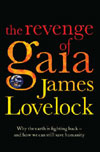
James Lovelock publishes The Revenge of Gaia
in which he warns that planetary ecosystems and human life may not survive the accelerating pace of climate change and advocates nuclear power as the best immediate option for energy production.
Conservative Party leader, David Cameron, appoints Zac Goldsmith, editor of The Ecologist , as Deputy Chair of his policy review committee on the environment. The US National Oceanic and Atmospheric Administration announce that CO2 levels have reached 381ppm (parts per million)which is 100ppm above the pre-industrial average and higher than levels for the past 30 million years. Two plays dealing with indigenous peoples and the extinction of their cultures are revived: Peter Shaffer’s
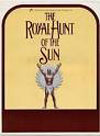
The Royal Hunt of the Sun
(first produced in 1964) at the National Theatre and Christopher Hamptons's
Savages
(first produced in 1973) at the Royal Court.
|
|
2005
|
|
Bill McKibben writes online article, 'Imagine that. What the world needs now is art, sweet art', asking where are the plays that will register climate change in our guts and imaginations.
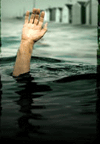
Hurricane Katrina devastates New Orleans, USA. A New Orleans resident (left) waits to be rescued. Sea surface warming caused by human actions is increasing the intensity of tropical storms.
The New Yorker publishes a three-part series, on climate change by Elizabeth Kolbert.
The third Cape Farewell expedition of artists and scientists sails to the High Arctic to study global warming.
The Royal Society of Arts and Arts Council England launch 'Arts & Ecology', a year-long series, of symposia, commissions and publications. PLATFORM, a social practice art collective, inititates Remember Saro-Wiwa, commissioning a public art Living Memorial to mark the 10th anniversary of the execution of writer and environmental activist Ken Saro-Wiwa and eight Ogoni colleagues by the Nigerian state.
|
|
2004
|
|
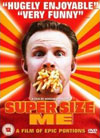
The movie Super Size Me released, in which film-maker Morgan Spurloch eats McDonald's fast-food meals for a month. In March, McDonald's announced that by the end of 2004, the Supersize portions will no longer be available.
The movie The Day After Tomorrow released. Hollywood disaster movie about climate change which makes no reference to US consumption of fossil fuels.
Steve Kurtz of Critical Art Ensemble charged with bioterrorism.
|
|
2003
| |
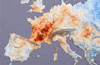
A summer heatwave, many argue caused by human influences on the environment, kills 30,000 people in Europe.
Activist, environmentalist and scientist, Vandana Shiva speaks on 'Diversity and Celebration' in a lecture organised by the London International Festival of Theatre.
Green Light Trust theatre company shortlisted for Schumacher Society Award.
Playwright Chris Ballance is elected as the Green Party candidate to be Member of the Scottish Parliament for the South of Scotland Region.
|
|
2002
|
|
Futerra produce the film The Seasons Alter using a scene from Shakespeare's A Midsummer Night's Dream to warn of climate change. Titania is played by Cherie Lunghi, Oberson by Lloyd Owen, and Helena by Keira Knightly.
|
|
2000
|
|
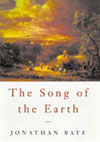
PLATFORM, a social practice art collective, receives the Schumacher Society Award. Shakespeare scholar Jonathan Bate publishes The Song of the Earth about literature and environment.
The movie Erin Brockovich released. Contaminated water in small town leads to one of the largest successful lawsuits in US history. The conference 'BETWEEN NATURE: Explorations in ecology and performance' at Lancaster University is the first international event bringing together performers, academics and activists. Launch of ashden directory, first internet site
for environmentalism and performing arts.
|
|
1999
|
|
The United Nations Kyoto Protocol is open for signature by countries agreeing to limit carbon dioxide emissions. The United States does not sign.
In 'The Archers', Tom Archer is acquitted on a charge of criminal damage, despite admitting to damaging a trial crop of GM oil seed rape.
|
|
1998
|
|
The movie A Civil Action released, about a lawyer's eight-year battle with giant corporations over children poisoned by industrial pollutants.
|
|
1996
|
|
Road-protestor Swampy emerges from tunnels at Fairmile Camp, Devon.
|
|
1995
|
|
10 November: Ken Saro-Wiwa and eight others hanged in Nigeria.
|
|
1994
|
|
Criminal Justice and Public Law Act makes a criminal offence of
'aggravated trespass'. The Kyoto Convention, The United Nations Framework Convention on Climate Change, enters into force. Una Chaudhuri guests edits an edition of the journal Theater on ecology and performance, which includes her seminal essay '"There Must Be a Lot of Fish in that Lake": Toward an Ecological Theater' (Vol.25:1).
|
1993
|
|
Tony Kushner writes the play Angels in America: Millennium
Approaches, the first play in which an angel descends to earth through a
hole in the ozone layer. Ben Elton publishes Gridlock in which a city chokes on carbon monoxide.
|
1992
|
|
June: Earth Summit in Rio. 1,600 scientists, including half the Nobel prize-winners, sign petition warning about dangers of climate change. It fails to make front page of the New York Times. Direct action anti-roads protests begin at Twyford Down in Hampshire, UK. PLATFORM's Still Waters, which imagined the un-burying of four tributaries of the River Thames, is among the earliest of such projects to uncover or 'daylight' a river.
|
|
1988
|
|
Global warming emerges as a public issue when NASA scientist James Hansen tells the US Congress that research indicates human beings are dangerously heating the planet, particularly through the use of fossil fuels.
22 December: Chico Mendes assassinated in Brazil.
|
|
1987
|
|
Gro Harlem Brundtland, Norwegian Prime Minister, publishes Our Common Future defining sustainable development as ‘Development which meets the needs of the present without compromising the ability of future generations to meet their own needs’.
|
|
1986
|
|
25 - 26 April: Chernobyl. The nuclear reactor in the former USSR explodes.
|
1985
|
|
10 July: Bombing of Greenpeace vessel, Rainbow Warrior.
|
|
1984
|
|
Bryony Lavery writes The Origin of the Species produced at Birmingham Rep Theatre.
The Arts for The Earth programme started by Friends of the Earth UK. 3 December: Bhopal. Union Carbide's chemical spill kills thousands in India.
|
1983
|
|
The movie Silkwood released, about contamination from a nuclear site.
|
|
1982
|
|
United Nations adopts a World Charter for Nature, endorsed by every nation except for the USA.
|
1979
|
|
James Lovelock publishes Gaia.
Release of The China Syndrome, a film about a television reporter and cameraman investigating a routine story at a local nuclear power plant who, with a whistleblower, expose a cover-up of failed safety procedures. The film was released 12 days before the Three Mile Island nuclear accident in Dauphin County, Pennsylvania.
|
|
1978
|
|
The tanker Amoco Cadiz runs aground off northern France spilling 70 million gallons of crude oil.
|
|
1975
|
|
The first episode of The Good Life, in which Tom Good gives up the rat race to become self-sufficient in Surbiton.
|
|
1974
|
|
Death of Karen Silkwood, whistle-blower on hazards at Kerr-McGee plutonium plant in Oklahoma. Peter Nichols writes The Freeway about a giant traffic jam on a motorway, produced by the National Theatre at the Old Vic.
|
|
1973
|
|
OPEC oil embargo inflicts world-wide economic damage. E.F. Schumacher's Small is Beautiful published. The Ecology Party founded in Britain. Christopher Hampton
writes Savages, about the extinction of the Brazilian Indians, produced at the Royal Court.
|
|
1972
|
|
A Blueprint for Survival
published by Edward Goldsmith
and the editors of The Ecologist.
David Holman's Drink The Mercury
produced, about the effects of heavy metal pollution on the fishermen of Minamata in Japan.
|
1971
|
|
Greenpeace
founded.
|
|
1970
|
|
Earth Day
first celebrated Time Magazine puts Barry Commoner on the cover and calls him "The Paul Revere of ecology." Teddy Goldsmith founds
The Ecologist. Max Nicholson's
The Environmental Revolution published.
|
|
1969
|
|
Friends of the Earth
founded by David Brower.
|
|
1967
|
|
Lynn White, Jr
publishes The Historical Roots of Our Ecological Crisis.
|
|
1964
|
|
Peter Shaffer's
The Royal Hunt of the Sun, about the Spanish invasion of the Inca empire produced at the National Theatre.
|
|
1962
|
|
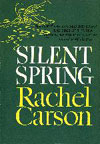
Rachel Carson
publishes Silent Spring,
an attack on the use of
pesticides, which gave rise to the environmental movement.
|
|
1961 | |
World Wide Fund for Nature (WWF) launched, now considered to have the fourth most recognised logo in the world. |
|
1949 | |
Aldo Leopold publishes A Sand County Almanac,
which defines conservation and wildlife management, and initiates a genre of nature writing.
Joseph Campbell publishes The Hero With A Thousand Faces, which tracks
the deep similarities between myths from diverse cultures.
| |
1945 | |
16 July: as first atomic bomb explodes at Trinity
site in New Mexico, nuclear scientist J. Robert Oppenheimer quotes
from the Bhagavad-Gita, 'I have become Death Shatterer of Worlds'.
|
| 1899 |
| Anton Chekhov writes Uncle Vanya.
|
| 1893 |
|
London premiere of Ibsen's An Enemy of the People at the Theatre Royal Haymarket. |
| 1884 |
|
Henrik Ibsen writes The Wild Duck. |
|
1882 | |
Henrik Ibsen writes
An Enemy of The People. |
| | | | |
|
|





 timeline
:: timeline
timeline
:: timeline