|
|

|
| |
| Platform |
|
|
|
| |
"Artists should be at the centre of society keeping alive 'a utopian vision', because society will not improve if the people envisioning a better society are politicians".
Peter Sellars, theatre director, in 'Artists, the cities and hard times' in the New York Times 4.7.1992
"...it's serious, it's politics, it's economics, it's everything. And art in that instance becomes so meaningful both to the artist and to the consumers of that art."
Ken Saro-Wiwa, 1994 interview
Platform is different. We combine art, activism, education and research in one organisation. This approach enables us to create unique projects driven by the need for social and ecological justice. Platform's current campaigns focus on the social, economic and environmental impacts of the global oil industry. Our pioneering education courses, exhibitions, art events and book projects promote radical new ideas that inspire change.
How we work is important to us. We operate through collective decision-making. Our team includes campaigners, artists and researchers who act together and with networks to achieve long-term, systemic goals. Everyone in Platform is committed to our core values of justice, solidarity, creativity and democracy.
Art can do things that information can't. Art takes our mind to new places, reaches our heart, and draws on our gut feelings. Platform's art connects people to global stories and issues on an emotional level. From performance to DJ-ing, social sculpture to sound art, creative writing to video, we and the artists we work with open up spaces for transformation, inspiration and change.
Platform performs and exhibits in whatever spaces serve the needs of the project: a field, the street, along a river or an office block. Platform's work has also taken place in cultural venues such as the South Bank Centre, Glastonbury Festival, ArtsAdmin, Tate, Brixton Jamm, Camp for Climate Action, Serpentine Gallery, Free University of Liverpool, Spacex, Live Art Development Agency, Bank of Ideas, New Art Exchange, Arnolfini, FACT, Carnegie Mellon (Pittsburgh), Centro Jose Guerrero (Grenada) and Kunstnernes Hus (Oslo).
Founded in 1983.
Awards: Time Out Award 1992 for 'Still Waters', Environment Foundation Fellowship 1997 for 'Carbon Generations', Schumacher Award 2000, CIWEM AWEinspiring Award 2013 for 30 years of achievement in art & activism.
|
|
|
|
Productions and Projects
|
|
|
Oil City
|
2013
A spy thriller for the post-occupy era.
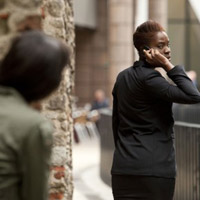
This new piece of site-specific immersive theatre by Platform takes you deep into the underbelly of London's oil economy.
Around you the financial sector shimmers in high-rise office blocks. Behind closed doors deals are done and oil projects financed with few questions asked. Meanwhile vast swathes of Alberta, Canada, teeter on the brink of ecological disaster, as the struggle to stop tar sands mining of lands protected under the First Nations' Treaty goes on.
By eavesdropping on business people and seeking out secret documents hidden in dead-drops, you will help piece together a puzzle that interweaves government files with financial deals. But whose truth counts? And what laws apply when lives are on the line but big profits are to be made?
Alongside the performance, a mobile website is available to explore the real story in both London and Calgary.
Oil City is supported by Artists' Project Earth, and was part of Artsadmin's Two Degrees festival.
|
|
|
Oil City
|
|
|
Tate à Tate
|
2012
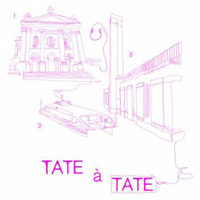
Art Not Oil, Liberate Tate and Platform have produced three audio downloads offering the listener alternative guided tours through the Tate galleries showing the effects of financial sponsorship by BP on those cultural institutions.
People can listen online or download the audio tours for free onto an MP3 player and listen through headphones while being guided through Tate Britain, the Tate Boat Thames taxi between Tate Britain and Tate Modern, and Tate Modern. The three tours are Panaudican, at Tate Britain, by Ansuman Biswas
This is not an oil tanker, on the Tate Boat, by Isa Suarez, Mae Martin and Mark McGowan
Drilling the Dirt, at Tate Modern, by Phil England and Jim Welton.
tateatate.org
|
|
|
|
|
And While London Burns
|
2006 - 2007
And While London Burns is a thriller, opera and guided walk through the financial district of London.
The MP3 soundtrack, composed by Isa Suarez, evokes London's financial history and its relation to the oil industries through the eyes of a financial worker concerned by the collapse of civilisations.
This requiem for a warming world stars Olivier Award nominee Douglas Hodge, Josephone Borradaile and Deborah Stoddart.
The opera is produced by Platform and the libretto is written by John Jordan and James Marriott.
Robert Butler reviews And While London Burns here on ashdendirectory.org.uk.
|
|
|
|
|
Freedom in The City
|
2004
Freedom in The City
Loot! Reckoning with the East India Company
Museum of the Corporation
Freedom in The City, a project to research the roots of contemporary corporate culture and behaviour, evolved with historian and socially responsible investment analyst Nick Robins. The Honourable East India Company was one of several EICs to be established across Europe in the 17th century, but only it and its rival the Dutch East India Company (VOC in Dutch) made any lasting impact in terms of heralding an enduring change in power relations between western Europe and the east beyond India. Yet walk about The City of London, the financial district which was its nerve centre, and you can barely find a trace of this 250-year old, extraordinarily powerful institution.
This global trading business was brought down not because of a disastrous fall in profits, but because of public outcry and political opprobrium on two issues: firstly its corrupt financial practices, and secondly, its behaviour as de facto governors of Bengal and India, especially over the handling of the Indian Mutiny in 1857. The British government in essence nationalised it, and moreover its land-holdings, handing India and Bengal from the rule of private enterprise to Great Britain and the British Empire.
The Loot! walks are interruptable two-handers, each person telling two parallel stories: one of the East India Company's activities, values and behaviour, told at the site of various of its moments in history (warehouses, headquarters etc), and the other, a set of questions about contemporary values in business that are arguably directly related to the specific issue in hand. A walk as performance or a performance as a guided walk, the Loot! walks have been a tremendously successful and vivid way of enabling participants to interact with stories from seemingly deep history
immediately connected to the here and now, in the context of a history of the EIC - that suspiciously, has been erased without trace.
For Freedom in The City core PLATFORM member Jane Trowell is working with Nick Robins.
Freedom in The City is one strand in 90% CRUDE, an ongoing investigation into and provocation around the culture and impact of transnational corporations.
|
|
|
|
|
killing us softly / Desk Killer
|
1999
Editors' note: see Platform's website for updates on the project, which is continuing as 'Desk Killer'.
By shining a light into the world of the bureaucrats, planners and businessmen who contributed to Nazism and the Holocaust, killing us softly raises a critical question as to whether such an event can be viewed as a finished, historical episode or whether the psychology and behaviour that
enabled genocide to occur then is not only still present today, but exists quite specifically both in the institutional culture of transnationals corporations and in the mindset and activity of many individuals working for such corporations.
killing us softly, conceived by Dan Gretton (writer and artistic co-director of Platform), was first made public through a series of eight performances between 1999 and 2003. These were, by the end, ten-hour events devised for a small interdisciplinary audience of nine people who were invited from fields such as industry, business, the arts, education, psychology, environmentalism, and campaigning. The performance itself is an intensive durational experience, combining lecture, poetry, autobiography, live music, slide and video. The audience sits in a semi-circular series of personal
darkened spaces, enabling them only to focus on the ideas and the images/sounds presented to them. Food, refreshment and warmth is important to provide a sense of safety and privacy.
After the performance (which for the ten-hour version, lasts seven hours), participants leave the performance space and walk to the 'after-space', a floating discussion, where a conversation begins. Here begins an ongoing dialogue about the issues in the work, as well as the form (if desired). Later, the participants also give written or one-to-one oral feedback.
The intention of this form is to create a highly acute environment where deep personal reflection is unavoidable, and where, as a result, new revelations and insights may occur, which can then be shared immediately if desired, or reserved for another time. The model differs from certain notions of performance's potential in making a political effect in that it is apologetically for a small strategically selected audience, concentrating on profound private impact and the ensuing ripple effect, rather than mass impact through mass access. Some months after the event, participants from a number of performances are invited to a group feedback day where reflection on the ramifications of the performance and the issues it tackles can be discussed in a more formal environment.The feedback and ideas generated from this work has been exceptionally engaged and provocatively useful.
On the recommendation of writer John Berger and others, killing us softly is now being written as a book which will combine the textures of the performance. personal narrative, factual research, analysis and prognosis. Considerable interest is being shown in this book and a leading literary agent has taken this forward to mainstream publishers.
killing us softly is one strand in 90% CRUDE, an ongoing investigation into and provocation around the culture and impact of transnational corporations.
|
|
|
|
|
90% CRUDE / Unraveling the Carbon Web
|
1996
Editors' note: 90% CRUDE continues as Unraveling the Carbon Web
90% CRUDE is an ongoing investigation into and provocation around the culture and impact of transnational corporations.
90% CRUDE is a journey. A journey to understand the impact on our minds, our bodies, our society and our environment of that most potent of modern phenomena - the transnational corporation. From the polluting of the air that we breathe, to the altering of the earth's climate, from the destruction of indigenous peoples to the demise of our town centres, transnationals are shaping our lives with unprecedented power.
So far, 90% CRUDE is made up of eleven public project strands, the current live
ones being:
killing us softly
Unraveling the Carbon Web, an investigation into the inter-relationships that support and sustain British-based oil companies BP and Shell
Freedom in The City
Ken Saro-Wiwa Memorial Campaign
Other strands have been:
Agitpod
Carbon Generations
Crude Operators
Gog and Magog
Funding for a Change
Ignites 1 and 2
Vessel
and
The "Q" (Quarterly) Events - live art walks in central London which take place on the very same days as the companies' publication of their reports on their 3-monthly results.
The performance work takes place over the cycle of a full year, in a series of 8, day-long events, each one created for the specific quarterly result day as determined by the company. They combine :
> music/sound-piece - listened to by each audience member on personal CD players
> contemporary research on the company, mirroring the actuality of their activity on the very day of the quarterly results
> performed stories - live readings of specially written fables about aspects of the companies' lives and impacts
> 4-hour discussion space - building on Platform's long history of creating imaginative spaces to catalyse discussion between diverse audiences
The walks take place in the Cities of London and Westminster, at locations that at illustrate the metabolism of BP and Shell and the institutions that serve to support their work, such as the finance, insurance and PR business.
The "Q" Events are a strategy whereby people from the oil industry, related fields such as finance, PR, insurance etc, the arts, campaigning and ecology can physically walk around the companies in London. By embodying the experience, standing outside the walls, entranceways and lobbies, and being made hyper-aware through the mingling of strategies named above, The "Q" Events create a susceptibility to new ways of thinking about the huge problems of fossil fuel impacts.
Meet the Speed of the City with Slowness
Meet the Anonymity of the City with Intimacy
Meet the Concrete of the City with Nature
|
|
|
|
|
|
|
|
More About
|
Other productions include:
Ignites 1 and 2
Vessel
RENUE (Renewable Energy in the Urban Environment)
Platform is a founder Trustee of this pioneering community renewable energy initiative which comprises a solar-assisted school and further education college, an eco-landscaped school grounds, solar shops and a new-build self-sufficient community resource centre.
RENUE was conceived by a group of local organisations in Wandsworth and Merton in south-west London who came together as a result of the MERTON ISLAND and DELTA projects.
RENUE is now working in partnership with SEA to form London's largest renewable energy initiative. For more information, please contact SEA/RENUE on 020 7582 9191.
|
|
|
|
|
|





 directory database :: search results